


New SNEP Rules for Counting Album Sales
3 min read
•January 14, 2026
Context
⚠️ Please note that the rules quoted below are valid in France. They may vary in other countries.
Lately, album + concert ticket bundles have emerged as a major strategic lever for artists, record labels, and live promoters.
In response to their growing widespread use, the SNEP (Syndicat National de l’Édition Phonographique), the French organization responsible for official music charts and certifications, has announced an evolution of the rules governing how album sales are counted, effective from 2026.
The objective is clear: to ensure that sales reflect a voluntary purchase of the album, in other words, to remove any form of coercion imposed on the consumers. These changes have a direct impact on marketing and commercialization strategies for artists, labels, live producers, and ticketing platforms.
Spoiler alert: conversion becomes the central performance metric for ticketing platforms.
New rules for album + ticket concert bundles
Sales from these bundles will only be eligible for SNEP charts if they comply with all three of the following conditions:
1. Mandatory separate sales
- The physical album (CD, vinyl, or USB key) AND the concert ticket must be offered individually from the moment ticket sales open on the ticketing platform.
- Consumers must be able to purchase tickets alone, without any obligation to buy an album.
Any offer that requires the purchase of an album in order to access a concert will be excluded from SNEP-certified charts.
2. Maximum quantity per order
- Buyers may freely choose the number of albums they wish to purchase.
- A strict limit of 3 physical music formats per order applies (down from 5 previously).
3. Minimum album pricing
- Minimum price increase: the minimum wholesale price of a physical format is set at €7 excl. VAT for the first 18 months of exploitation (previously €3.30 excl. VAT).
- It is no longer possible to include an album for free alongside a concert ticket.
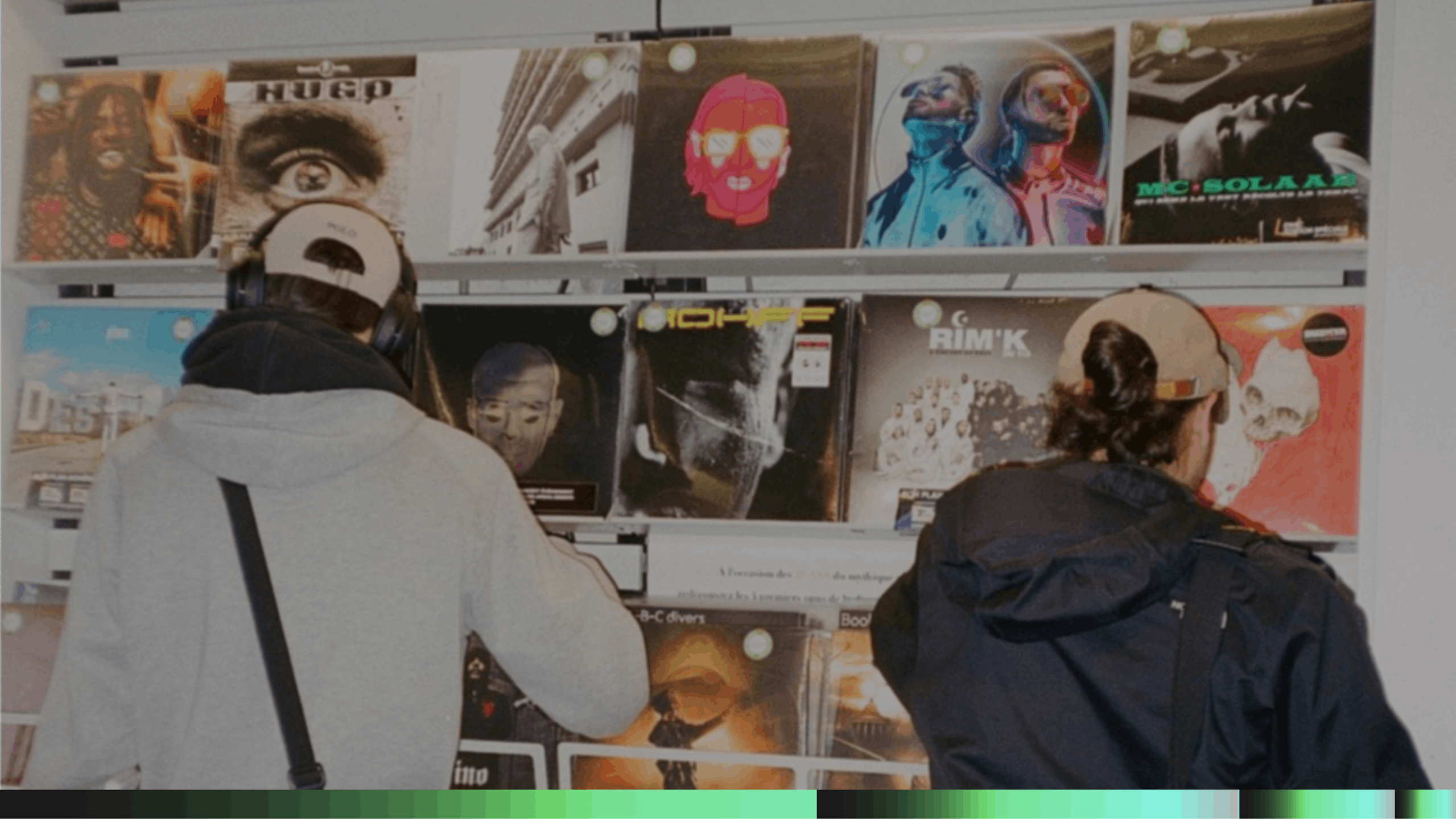

What this changes for artistes, labels and promoters
- End of so-called “forced” sales being counted, as well as the associated exclusivity periods (previously up to 72 hours before the rule change)
- Charts and sales statistics that more accurately reflect genuine audience engagement
- A growing need to: better enhance the value of additional products rethink bundles as a value proposition, rather than a coercive mechanism
Why conversion rates become a central challenge
Bundles remain commercially authorized, but their performance now relies on one single key lever: the conversion rate.
In this new framework, performance is no longer measured solely by volume, but by conversion quality. To maximize sales, it becomes essential to focus on:
- A desirable recorded music product
- A clear product page that highlights the value of the add-on offer
- A fully customizable white-label D2C experience (so audiences feel they are buying directly from the artist rather than a third-party platform)
- A simple and frictionless purchase journey
👉 The lever is no longer obligation, but desirability.


Whitelabel benefits for your brand
The Billy case: conversion as a key performance indicator
At Billy, this logic is already embedded at the core of our checkout experience, enabling our clients to meet multiple objectives simultaneously.
In 2025:
- 25% conversion rate
- Equivalent to 1 additional product (merchandise or recorded music) sold for every 4 tickets
This model makes it possible to:
- increase average order value
- comply fully with SNEP regulations
- deliver healthy and sustainable monetization
- accurately reflect an artist’s universe
- provide a smooth and intuitive purchase experience for consumers
In short: value is no longer forced, it is earned.
Conclusion
The new SNEP rules encourage a more transparent, audience-respectful, and economically sustainable approach. Bundles evolve into a tool for healthy and long-term monetization, aligned with the new expectations of the market.